Sarcopenia
sarcopenia
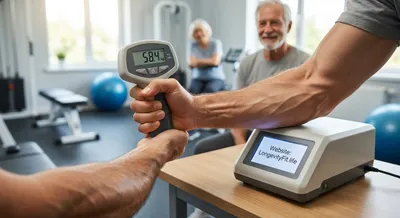
Grip Strength as a Survival Biomarker: Can Training Close the Gap?
For example, a large study following older adults around the world found a clear pattern: higher grip strength means lower risk of death. In that...
Sarcopenia
Sarcopenia is the progressive loss of muscle mass and strength that often happens as people age. It’s not simply getting a little weaker; it can seriously affect balance, mobility, and the ability to do everyday tasks. Muscle loss begins slowly and is influenced by inactivity, poor nutrition, hormonal changes, and chronic illness. Because muscle supports movement and metabolism, sarcopenia raises the risk of falls, fractures, frailty, and loss of independence. Healthcare providers can assess it with simple strength tests, measurements of muscle size, and by checking how well someone performs daily activities. The good news is that sarcopenia can be slowed or partly reversed with regular resistance training and adequate protein intake. Other helpful steps include vitamin D when deficient, managing chronic diseases, and staying physically active overall. Early detection matters because timely action makes it much more likely that a person will keep strength and mobility. Understanding sarcopenia helps people and caregivers prioritize exercise, nutrition, and medical care to stay independent longer.
Get New Longevity Research & Podcast Episodes
Subscribe to receive new research updates and podcast episodes about longevity, fitness, healthspan, healthy aging, nutrition, supplements, and practical lifestyle optimization.