Grip Strength as a Survival Biomarker: Can Training Close the Gap?
Grip Strength: A Simple Health Signal
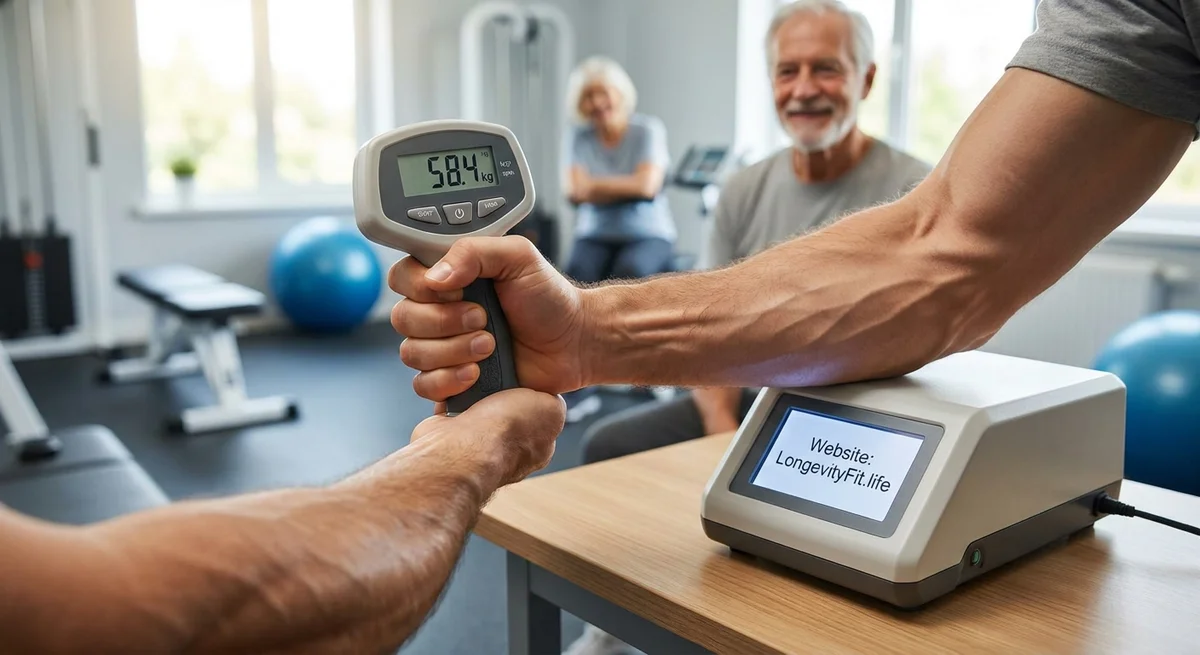
Grip strength – how hard you can squeeze something – is more than a quirk. It turns out to be a simple health marker for how well people age. Researchers have used big aging studies like the Health and Retirement Study (HRS) and SHARE to track handgrip strength and health. They find that people with stronger grips tend to live longer, think better, and need the hospital less. In other words, your handshake might tell a real story about your health (pmc.ncbi.nlm.nih.gov) (pmc.ncbi.nlm.nih.gov).
For example, a large study following older adults around the world found a clear pattern: higher grip strength means lower risk of death. In that analysis, death rates fell steadily as grip strength climbed up to about 42 kg in men and 25 kg in women (pmc.ncbi.nlm.nih.gov). In plain terms, weaker hands went with much higher death rates. In one pooled analysis, the people in the weakest grip group were about 1.6 times more likely to die than those in the strongest group (www.sciencedirect.com). In short, having low grip strength is a warning sign: it went along with a big jump in mortality risk.
Brain Health and Grip
Grip strength is also a clue to brain health. Scientists have pooled many studies to see who is more likely to have memory and thinking troubles. They consistently find that poor grip goes with poor brain outcomes. One major review found that older adults with low grip had about an 80% higher risk of cognitive decline (thinking or memory problems getting worse) over time (pmc.ncbi.nlm.nih.gov). In simpler terms, weaker hand strength tended to go along with much more loss of mental sharpness.
What about full-blown dementia? In another big analysis of roughly 180,000 people, researchers compared the highest third of grip strength to the lowest third. Those with strong grips had about 27% lower risk of developing dementia and about 32% lower risk of Alzheimer’s disease than those with weak grips (link.springer.com). In other words, having a strong grip was linked to staying mentally fit. (These studies took into account age, sex, education and other factors, making the link quite striking.)
Grip and Hospital Visits
Weak grip strength often signals frailty. In one British study of older men and women, those with weaker grips ended up in the hospital more often over the next decade (pubmed.ncbi.nlm.nih.gov). For example, each drop of one standard deviation in handgrip (a moderate amount) raised women’s 10-year hospitalization risk by about 10% (pubmed.ncbi.nlm.nih.gov). Even after adjusting for age, body size, lifestyle and other health issues, the link stayed significant. In short, weaker grip meant more visits to the doctor or hospital. (This fits the idea that muscle weakness can make daily tasks hard and raise chances of falls or illness.)
Getting Stronger: Can Training Help?
The good news is yes – you can train to improve grip strength. Numerous exercise studies show that resistance training (lifting weights or using resistance bands) makes your hands and forearms stronger. A recent review of trials in older adults with weak muscles found that the best improvements came from training about 3 times per week at a moderate load and progressing over a few months (pmc.ncbi.nlm.nih.gov). For example, doing exercises 3 times weekly at roughly half of your maximum effort (about 50% of your one-rep max) for around 4–5 months led to gains of 7–9 kilograms in grip strength on average (pmc.ncbi.nlm.nih.gov). (The study suggested doing about 6 sets of 15 repetitions per session, with 16 reps each set, which works out to around 1,400 “reps” per week (pmc.ncbi.nlm.nih.gov).) In practice, this might mean doing routines like dumbbell curls, wrist exercises, farmer’s walks (carrying weights in your hands), or using grip trainers.
Importantly, getting stronger by exercise seems to improve not just muscles but brain health too. A systematic review of randomized trials showed that older adults assigned to resistance exercise programs got measurable mental boosts (pmc.ncbi.nlm.nih.gov). People who weight-trained scored better on tests of overall thinking, memory and learning compared to those who did not train (pmc.ncbi.nlm.nih.gov). For example, pooled data from 17 trials found that exercisers saw a significant lift in global cognition (effect size ~0.4) and big gains in memory scores (pmc.ncbi.nlm.nih.gov). In short, lifting weights and challenging muscles did more than pump up arms – it helped the brain too.
One way researchers test if grip improvement causes better health is genetics. A clever method called Mendelian randomization uses people’s genes like a natural trial. One such genetic study supports a causal link: people with gene variants for stronger grip had lower risk of heart disease and atrial fibrillation (a heart rhythm problem) (pmc.ncbi.nlm.nih.gov). In other words, at the genetic level, stronger musculature seems to help protect the heart. This suggests that improving grip (which reflects overall muscle strength) may indeed help reduce disease risk, not just be a passive sign.
Putting It Into Practice
All this science points in one clear direction: strengthening your grip can pay off in health. What goals and workouts make sense? Many experts use simple cut-offs. For example, research-based criteria often flag men under 25–30 kg and women under 15–18 kg of grip as a “low strength” zone (risk of frailty). Clinically, aims like at least ~30 kg for men and ~20 kg for women are often suggested for older adults to be in a lower-risk category. (To put it another way, being above around 42 kg for men or 25 kg for women seems to keep you on the safer side of the risk curve (pmc.ncbi.nlm.nih.gov).)
If your grip is below ideal, start a plan: you might use gentle hand exercises at first. Squeeze a soft ball or a sensor device (hand gripper) for a few sets. Do wrist curls with small dumbbells or bottle weights several times a week. Try carrying grocery bags or doing push-ups from your fingertips. Gradually increase weight and reps as you get stronger. Trainers also recommend exercises like farmer’s walks (carrying heavy objects in each hand while walking) and plate pinches (pinching weight plates or books) to really tax grip muscles.
Most importantly, be consistent. Studies show that doing these exercises regularly (again, about 2–3 times weekly at first) leads to steady gains. Even middle-aged or older people can boost their grip power this way. Over a few months, each extra kilogram of grip you add could translate to a meaningful cut in risk. For example, lifting an additional 7–8 kg as in the studies above essentially moved people from a higher-risk group closer to the low-risk group (pmc.ncbi.nlm.nih.gov) (link.springer.com).
Staying Sharp and Healthy
In summary, grip strength is a quick window into health and survival. A weak handshake in midlife or later often signals needing more caution – but the story is not fixed. You can raise that strength bar. By following a simple resistance training routine and staying active, you literally “grip” more of your health in hand. Doing so can help you carry groceries without strain, reduce your odds of falls or hospital visits, and even keep your mind sharper.
All the data show the same message: even modest strength gains make a real difference. So next time you hear about a study linking grip to longevity or dementia, remember – it is a positive one. It means you have a handle on a concrete way to protect yourself. Build your grip, and you build a bridge to longer, healthier life (pmc.ncbi.nlm.nih.gov) (pmc.ncbi.nlm.nih.gov).
Get New Longevity Research & Podcast Episodes
Subscribe to receive new research updates and podcast episodes about longevity, fitness, healthspan, healthy aging, nutrition, supplements, and practical lifestyle optimization.