Home Exercise
home exercise
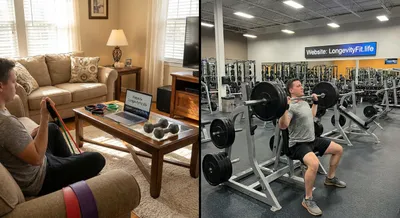
Home-Based vs Gym-Based Resistance Training: Effectiveness and Scalability
Many people wonder: is working out at home as good as working out in a gym? How do results compare in health, sticking with the program (adherence),...
Home Exercise
Home exercise means doing physical activities and workouts in or around your living space instead of going to a gym or studio. It can include bodyweight moves like squats and push-ups, simple weights or resistance bands, stretching routines, brisk walking, or short cardio circuits you can do in a small area. The idea is to use what you have and fit movement into daily life, which makes it easier for many people to start and keep going. Home exercise matters because it lowers barriers like cost, travel time, and scheduling conflicts that often stop people from being active. It can be adapted for all fitness levels and for people with limited mobility or busy schedules. With a clear plan, basic equipment, and attention to safety, home exercise can improve strength, stamina, flexibility, and mood. It also supports long-term health by helping prevent chronic conditions like heart disease and type 2 diabetes when done regularly. To be effective you should focus on progressive challenges, proper form, and consistency, and include warm-ups and cool-downs. Tracking progress and occasionally changing routines keeps improvements steady and reduces boredom. Home exercise isn’t a perfect substitute for every type of supervised training, but it is a practical, powerful way to stay active and healthy for most people.
Get New Longevity Research & Podcast Episodes
Subscribe to receive new research updates and podcast episodes about longevity, fitness, healthspan, healthy aging, nutrition, supplements, and practical lifestyle optimization.