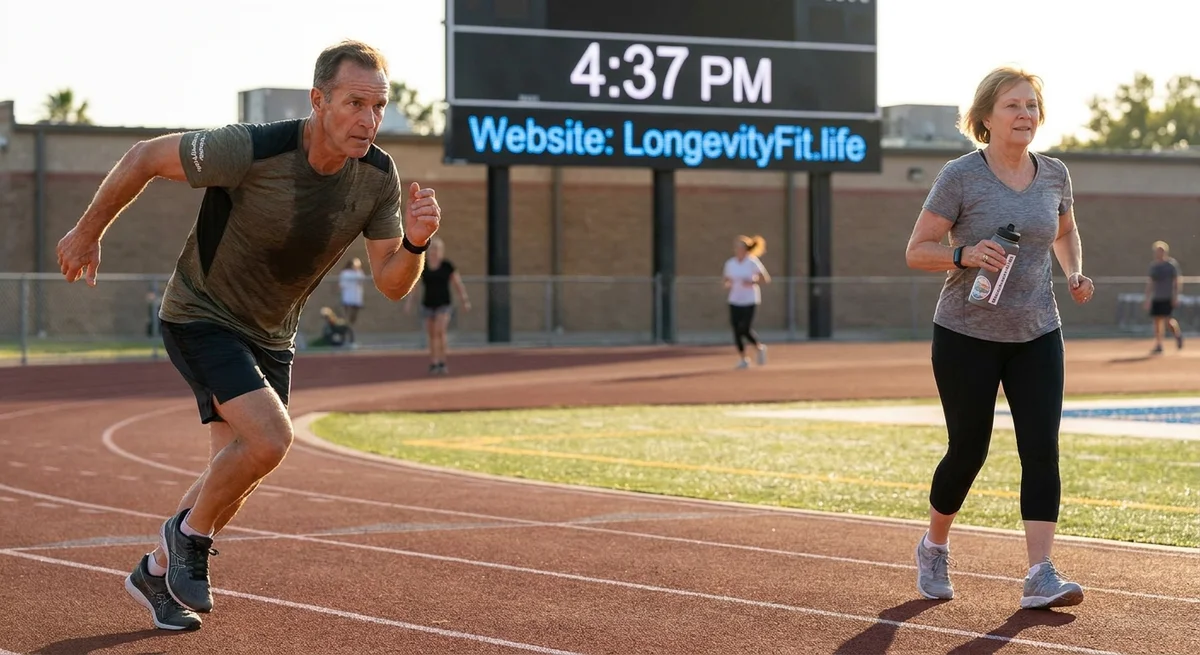
Intensity vs Volume: Which Matters More for Longevity?
Intensity vs Volume: Which Matters More for Longevity?
Even a little exercise can help you live longer (time.com). Studies found that people doing just 10–59 minutes of mild or moderate activity each week had an 18% lower risk of premature death than people who got none (time.com). That means even quick walks or short bike rides each week can pay off. But people often wonder: if you want to live a long, healthy life, what is more important — working out very hard but a little bit, or working out moderately and more often? Research shows that both matter. In general, the total volume of exercise (how much you do in a week) is a key driver of health, but intensity (how hard each session is) adds extra benefit.
Understanding Intensity and Volume
- Volume means the total amount of exercise you do. This can mean the total minutes of movement each week or the total sets and reps in weightlifting. For example, three 20-minute walks (60 minutes total) is more volume than one 60-minute walk. In weight training, doing 3 sets of 10 reps per workout is more volume than 1 set of 10 reps.
- Intensity means how hard you exercise during each session. Running fast or lifting very heavy weights is high intensity. Slow walking or light weights is lower intensity. A common measure is Rating of Perceived Exertion (RPE), how hard you feel you are working on a scale of 1–10.
Government health guidelines suggest a mix: at least 150 minutes per week of moderate activity (brisk walking, light jogging) or 75 minutes of vigorous activity (running, fast cycling), plus muscle-strength workouts 2 days a week (time.com). These are just targets; the good news is some exercise at any level is better than none.
What the Research Says About Longevity
Any Exercise Helps
Most studies agree that any exercise is good for longevity. In a survey of 88,000 adults (ages 40–85), people who moved even a tiny amount lived longer than sedentary folks (time.com). Interestingly, the more they exercised, the more they reduced their health risks. But the biggest jump was going from doing nothing to doing something. People getting just 10–59 minutes per week of light-to-moderate activity had about an 18% lower death risk than those who were totally inactive (time.com). In other words, turning off the TV and taking short walks during the week made a big difference.
For older adults in particular, total volume seems to matter a lot. In one study of men around 78 years old, researchers found that it did not matter how long or how hard each exercise session was. What mattered was the total activity time over the week (time.com). Every extra chunk of movement counts. They found, for example, that 30 extra minutes of even light activity (like easy walking or gardening) per day was linked to a 17% lower risk of dying early. If that 30 minutes was harder activity, the benefit was even higher (about 33% lower risk). In short, adding up many short bursts of movement came out about as good as longer sessions (time.com).
High Intensity vs Moderate: Both Work
Intense workouts can give quick gains, but moderate workouts also build health steadily. For example, a major 5-year study of people aged 70–77 compared high-intensity interval training (HIIT) with moderate exercise (www.bmj.com). Everyone did two exercise sessions per week. The HIIT group (short bursts of hard exercise) ended up doing a bit more of their exercise in a hard zone than the moderate group did. After 5 years, only 3% of people in the HIIT group had died, versus about 6% of people in the moderate group (www.bmj.com). While the difference was not statistically conclusive, the trend suggests that seniors pushing a little harder might get more benefit. In that same study, combining both types of exercise (the control group was told to just stay active per guidelines) had no big difference in overall death rates compared to the target exercise groups (www.bmj.com). The take-home message: any exercise is better than none, but the hardest sessions may give the biggest boost in longevity.
Another large study looked at people with heart disease. It found that getting to about 29 MET-hours per week of exercise (about the current guidelines, e.g. ~300 minutes of moderate activity) cut all-cause death risk by 44% compared to doing none (pmc.ncbi.nlm.nih.gov). Crucially, doing high-intensity or moderate-intensity exercise gave very similar benefits in that group (pmc.ncbi.nlm.nih.gov). In other words, for heart patients, both going a little harder or spending more time at moderate effort were about equally protective.
Strength Training vs Cardio: Combine Them
Both aerobic (cardio) and strength (weight) training have big benefits. Federal guidelines say people should do both. A large U.S. study (the NIH-AARP study) followed over 216,000 adults aged ~70 for 15 years and found that any weightlifting (vs none) was linked to about a 6% lower risk of all-cause death (pmc.ncbi.nlm.nih.gov). That benefit held even after adjusting for other exercise and health factors. Lifting weights also cut deaths from heart disease and even some cancers. Importantly, people who did both aerobic exercise and weightlifting had the lowest death risk of all (pmc.ncbi.nlm.nih.gov).
So the answer is not just intensity or volume, but a bit of everything. One Time magazine article summarized it well: people who did 1–2 strength workouts per week plus regular aerobic exercise had far lower death risk than those who did none (time.com). In that study, 1–2 lifting sessions alone gave a 9% drop in death risk, and combining weights with cardio gave a 41% drop (time.com). This fits health guidelines: do at least two days of resistance training and the recommended hours of cardio (time.com) (time.com).
Special Cases: Older Adults, Women, Diabetes, CVD
-
Older adults (70+): The good news is that older people get big benefits from exercise, even if they start late. The Norwegian Generation 100 trial (ages 70–77) showed that intense workouts raised quality of life and fitness in seniors (www.tomsguide.com), and tended to lower death rates compared to gentler workouts (www.bmj.com). Other research found that even short bursts of light activity helped older men live longer (time.com). And one study of seniors (average age ~70) found that just any weightlifting (even 5–15 minutes a week) cut their death risk by about 6% (pmc.ncbi.nlm.nih.gov). In sum: seniors should do some of both aerobic and strength exercise; even short walks and light weights make a big difference.
-
Women: Women seem to gain at least as much, or even more, from exercise compared to men. In fact, one analysis found women needed only about half the exercise for the same benefit. Men reached their big gain at ~300 minutes of cardio per week, while women hit it at ~140 minutes (time.com). Likewise for lifting weights: doing one session a week gave women as much longevity advantage as three sessions did for men (time.com). Another study of older adults noted that strength training appeared to lower the death rate even more in women than in men (pmc.ncbi.nlm.nih.gov). So women should feel encouraged: even a moderate amount of activity can yield large health boosts (time.com) (pmc.ncbi.nlm.nih.gov).
-
Diabetes: Having type 2 diabetes raises health risks, but exercise is a powerful antidote. A big review of 155,000 people with diabetes found that those who stayed active cut their all-cause death risk by about 43% and their heart-death risk by 45% (pmc.ncbi.nlm.nih.gov). The benefits were even stronger for older patients and for those who kept a healthy weight. In practical terms, moving regularly (as acidity to usual care plans) significantly adds years and health for diabetics.
-
Cardiovascular Disease (CVD): People with heart disease also see huge gains from exercise. A cohort of over 8,600 heart patients showed that even moderate activity was associated with a 35–40% lower risk of death compared to being inactive (pmc.ncbi.nlm.nih.gov). Vigorous activity gave very similar benefits (pmc.ncbi.nlm.nih.gov). Strength training, on top of that, cut death risk further. The key is that some activity — even if not strenuous — dramatically lowers risks in these groups (pmc.ncbi.nlm.nih.gov) (pmc.ncbi.nlm.nih.gov).
In summary, across many studies, any exercise is linked with longer life. More total exercise (volume) usually means more benefit, but doing workouts harder (higher intensity) can get more done in less time. Combining cardio and strength gives the biggest health boost (pmc.ncbi.nlm.nih.gov) (time.com).
Balancing Intensity and Volume: Practical Plans
So how do you balance intensity and volume to help you live longer without burning out? Experts suggest mixing both in a doable way. Here's how to think about it:
- Use the guideline as a base, but start small if needed. You don’t have to start at 150 minutes right away. A little bit counts. Even 10–20 minutes of brisk walking most days adds up. If you’re just beginning, try breaking it into short daily sessions (e.g. 10-minute walks or chore sessions) which is easier to maintain. You can slowly increase as you feel stronger.
- Mix hard days and easy days. To avoid fatigue, alternate high-intensity workouts with lighter recovery days. For example, you could do vigorous exercise (like jogging, fast biking, or a fast circuit workout) 2 days a week, and on other days do moderate exercise (like brisk walking, swimming, or cycling at an easy pace). This way you still hit your volume target but don’t exhaust yourself every session.
- Strength train 1–2 times per week. Include exercises for all major muscle groups (legs, core, chest, back, arms). You can keep each session short by doing 1–3 sets of 8–12 repetitions for each exercise, using a weight or resistance band that makes the last few reps a bit challenging. For example: 10 push-ups (or wall-push-ups) + 10 bodyweight squats + 10 dumbbell rows + 10 lunges = one circuit. Do this circuit 1–2 times. That’s a full-body strength workout in about 15–20 minutes. If you prefer fewer reps, increase the weight or resistance so that your muscles work hard by the last rep.
- Short intense workouts (HIIT). If you’re pressed for time or want to emphasize intensity, doing high-intensity intervals is efficient. For example, after warming up, sprint (or pedal fast on a bike) hard for 30 seconds, then rest 90 seconds, and repeat 4–6 times. This 10–15 minute workout can improve fitness quickly (www.tomsguide.com). You can also HIIT on machines (elliptical, rower, treadmill) by alternating 1 minute hard/2 minutes easy. Just be sure to listen to your body – skip HIIT days if you feel very tired or sick.
- Easy workouts for volume. On days when you want to increase volume but not overall stress, do easier activities like walking, light cycling, or swimming, stretching, or yoga. These activities still count towards your weekly minutes, help recovery, and improve your health. Walking while talking on the phone, gardening, or playing with grandkids are all “exercise minutes” too. Daily movement (even if gentle) really adds up to better longevity (time.com).
- Listen to your energy. If you feel sore or tired one day, it’s okay to skip a tough workout and take a gentle walk or do some stretching instead. Over time, gradually increase the total minutes you do each week. For example, add 5–10 minutes extra per week or add one more set in your strength routine, so your body adapts.
Here are a few sample weekly templates you could adapt:
-
Template A – Balanced Mix:
- Monday: 30-minute brisk walk (moderate intensity)
- Tuesday: Strength Circuit (15–20 minutes of bodyweight or light weights, 1–2 sets of 8–12 reps, covering squats, push-ups, rows, lunges)
- Wednesday: 20-minute moderate bike ride or jog (mix of easy plus some faster intervals)
- Thursday: Rest or a gentle 20-minute stretch/yoga session (to recover)
- Friday: 15-minute HIIT (e.g. 30 seconds fast/90 seconds easy cycling or running, 6 repeats)
- Saturday: Strength Circuit (same routine as Tuesday)
- Sunday: 30–60 minute fun activity (walking with family, dancing, gardening, etc.)
-
Template B – Time-Efficient HIIT Focus:
- Monday: 10-minute HIIT (warm up, then 6×30s sprints+rest, cool down)
- Tuesday: 20-minute brisk walk or light jog
- Wednesday: Strength Circuit (15 minutes, 1–2 sets of heavy resistance, few exercises to near failure)
- Thursday: Easy day (light yoga or 30-min walk)
- Friday: 10-minute HIIT (as above)
- Saturday: Strength Circuit (same as Wednesday)
- Sunday: Rest or leisurely walk
-
Template C – Volume-Oriented (Lower Intensity):
- Monday: 45-minute brisk walk (maybe split into 3×15 min chunks during day)
- Tuesday: 30-minute bike or swim (steady, moderate pace)
- Wednesday: Strength Circuit (20 minutes, 2 sets of 8–12 reps with moderate weights)
- Thursday: 30-minute walk (easy pace)
- Friday: 45-minute group fitness class or long walk/hike (keeping active most of the day)
- Saturday: Strength Circuit (same as Wednesday)
- Sunday: Rest or very light activity (stretching, casual stroll)
You can mix and match these ideas. The key is consistency over time. Even if you drop intensity or volume sometimes, just keep moving regularly. Adjust the plan to your health and schedule: if you have joint pain or diabetes, favor lower-impact moves (walking, swimming) but still include some strength exercises. If you have heart disease, check with a doctor but remember: avoiding exercise is far worse than doing moderate exercise. Most people can safely start with gentle to moderate workouts and build up.
Conclusion
In the quest for a long healthy life, neither intensity nor volume alone is the sole hero — they work together. Research shows that doing any exercise at all is massively better than doing none (time.com) (pmc.ncbi.nlm.nih.gov). Adding more volume (longer sessions or more workouts) keeps driving benefits up, and adding some higher intensity (faster runs, heavier lifts, HIIT) gets more done in less time. Strength training stands out as especially beneficial: just two days a week of weight or resistance exercises helps muscles, bones, metabolism and also extends life (pmc.ncbi.nlm.nih.gov) (time.com).
So what matters most is finding a balanced routine you can stick with for years. Try mixing in a variety of workouts so you don’t get bored or burned out. And remember: small steps count. Even a 10-minute walk adds years (time.com). If you keep at it, you will not only live longer – you’ll feel stronger and healthier every day.
Get New Longevity Research & Podcast Episodes
Subscribe to receive new research updates and podcast episodes about longevity, fitness, healthspan, healthy aging, nutrition, supplements, and practical lifestyle optimization.